Every October 31st, millions of people around the world carve pumpkins, wear costumes, and hand out candy without a second thought. But what if I told you that each of these seemingly innocent Halloween traditions has roots in ancient Celtic witchcraft and pagan rituals? The festival of Samhain, celebrated over 2,000 years ago by the Celts, laid the groundwork for virtually every Halloween custom we cherish today. Let’s unveil the mystical origins behind five spooky Halloween traditions that are actually ancient witchcraft practices.
1. Jack-O’-Lanterns: Celtic Spirit Protection Magic
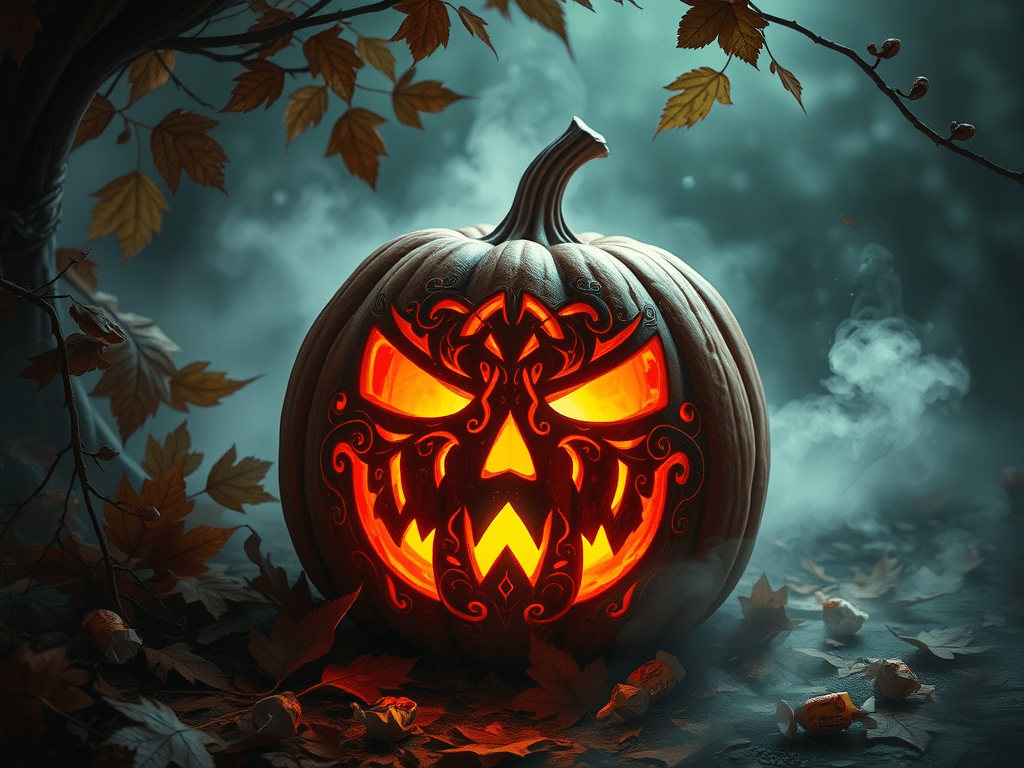
When you carve a grinning face into a pumpkin and place a candle inside, you’re practicing an ancient Celtic protection spell that dates back to Samhain. The Celts believed that on the evening of October 31st, the veil between the living and the dead grew thin, allowing spirits to cross over into our world.
To protect themselves, ancient Irish and Scottish people carved frightening faces into turnips, potatoes, and beets, placing hot coals or candles inside to create lanterns. These grotesque carved vegetables served a dual purpose: they commemorated the legend of Stingy Jack, a blacksmith cursed to wander the earth with only a carved turnip for light, and they warded off malevolent spirits who might cause harm during Samhain.
The carved faces were strategically placed on windowsills and doorways to frighten away any vengeful ghosts, demons, or fairies attempting to enter homes. When Irish immigrants arrived in North America during the 19th century, they discovered pumpkins were far easier to carve than turnips, and the jack-o’-lantern as we know it was born.
2. Trick-Or-Treating: Appeasing Supernatural Beings
The beloved tradition of children going door-to-door demanding candy has surprisingly dark origins in Celtic ritual offerings. During Samhain, the ancient Celts left food and drink offerings outside their homes to appease the spirits of the dead, the powerful fairy folk known as the Fae, and the gods called the Tuatha De Danann.
These weren’t friendly gestures, they were protective measures. The Celts believed that if you failed to provide adequate offerings during Samhain, supernatural beings would unleash deadly tricks upon you and your household. Restless spirits seeking revenge and mischievous fairies with dangerous magical powers roamed freely on Halloween night, and only proper tributes could keep them at bay.
Over centuries, this evolved into “souling,” where poor people would visit wealthy homes offering prayers for deceased loved ones in exchange for soul cakes made with spices and raisins. Eventually, costumed individuals began collecting treats on behalf of the spirits they impersonated, leading to our modern trick-or-treat tradition. The implicit threat remains: provide treats, or face the tricks.
3. Bobbing For Apples: Celtic Divination Rituals
What seems like a harmless party game is actually an ancient Celtic divination practice used to predict romantic futures and reveal hidden truths. Apples held sacred significance in Celtic mythology, they represented fertility, love, and access to the Otherworld. When cut horizontally, apple seeds form a five-pointed star or pentagram, making them perfect tools for fortune-telling rituals.
During Samhain, when barriers between worlds dissolved and magical powers peaked, young Celtic women would bob for apples to divine whom they would marry. Each floating apple corresponded to a potential suitor, and the number of attempts required to catch an apple revealed the future of that relationship. Catch it on the first try, and love would blossom. The second try meant initial passion followed by disappointment. Three tries? The relationship was doomed.
The Romans, who occupied Celtic lands, merged this tradition with worship of their goddess Pomona, whose symbol was the apple. This fusion strengthened the association between apples and Halloween, transforming a pagan divination ritual into a game still played at Halloween parties today.
4. Wearing Costumes: Disguising From Evil Spirits
Those adorable superhero and princess costumes worn by modern children descend from a much darker Celtic practice: wearing terrifying disguises to confuse and repel evil spirits. The Celts didn’t dress up for fun, they dressed up for survival.
On Samhain night, when ghosts of the dead and malevolent entities crossed into the mortal realm, Celtic people wore frightening masks, animal skins, and grotesque costumes to blend in with the supernatural beings roaming the darkness. The logic was simple: if spirits couldn’t distinguish you from one of their own, they couldn’t harm you.
Groups known as “guisers” or “mummers” continued this tradition through the centuries, representing the “ghoulies, ghaisties and bogies; fairies, banshees and gruagachs; witches, warlocks and wurricoes” that Celtic folklore warned stalked the earth on Halloween. Some guisers blackened their faces with ashes from Druidic bonfires for additional protection and good fortune.
This practice of disguising oneself from spirits gradually evolved into the costume parties and trick-or-treating outfits we enjoy today, though modern costumes prioritize cuteness over the original goal of terrifying supernatural entities.
5. Black Cats As Halloween Symbols: Fairy Familiars And Blood-Drinking Spirits
Perhaps no Halloween symbol carries more witchcraft baggage than the black cat. In Celtic folklore, black cats weren’t simply unlucky omens, they were believed to be fairies in disguise, capable of crossing between the mortal world and the Otherworld during Samhain to spy on human activities.
Later, during the witch trial hysteria of medieval Europe, black cats became associated with witches as their “familiars”, supernatural animal companions that allegedly drank a witch’s blood in exchange for serving her magical purposes. These familiars were believed to be demons or transformed spirits that aided witches in casting spells and working dark magic.
The Celtic festival of Samhain particularly honored the Cat Sìth (or Cù-Sìth), a spectral black cat from Scottish Highland folklore with a white spot on its chest. This fairy creature was said to haunt the Scottish Highlands and steal the souls of the dead before they could pass on to the afterlife. Offerings of milk were left out on Samhain to appease the Cat Sìth and ensure blessings rather than curses.
The enduring association between black cats and Halloween stems directly from these ancient Celtic beliefs about felines serving as intermediaries between the natural and supernatural worlds.
Embracing The Magic Within Halloween
Understanding the ancient witchcraft origins of Halloween traditions doesn’t diminish the joy and excitement of modern celebrations, it deepens them. Each carved pumpkin, each costume, each piece of candy handed to trick-or-treaters connects us to thousands of years of human attempts to understand death, honor the departed, and navigate the mysteries between worlds.
The Celtic festival of Samhain recognized what many ancient cultures understood: that autumn represents a liminal time when light yields to darkness, when the harvest ends and winter begins, when life acknowledges death. The rituals created during this sacred time weren’t about evil, they were about protection, reverence, divination, and community.
So this Halloween, as you participate in these time-honored traditions, remember you’re not just celebrating a commercialized holiday. You’re engaging in practices that have been performed for millennia, connecting you to countless generations who carved vegetables by firelight, left offerings for wandering spirits, and donned masks to dance with the dead.
The magic has always been there. You’ve been practicing witchcraft all along.
 Magick with Alex
Leave a comment